Resistance temperature detectors (RTDs) and thermocouples (TCs) are the two mainstream contact temperature sensors used in industry. An RTD exploits the change of metal resistance with temperature, while a thermocouple generates a thermoelectric voltage through the Seebeck effect. IEC 60751 governs platinum RTDs and IEC 60584-1 governs thermocouple types and tolerances. The two families differ clearly in signal type, temperature range, accuracy, compensation and cost; this article compares them by recognized classification, tolerance formulas and selection criteria. Parameters are subject to the standard texts, official data sheets and nameplates.
I. Technical Positioning
| Item | Content |
|---|
| Measurement category | Contact temperature sensors, typically paired with temperature transmitters, indicators, or DCS/PLC analog inputs |
| RTD principle | Resistance rises with temperature (positive temperature coefficient); platinum Pt100/Pt1000 is most common |
| TC principle | Two dissimilar metals form a circuit; a temperature difference between the measuring and reference junctions produces a thermoelectric voltage (Seebeck effect) |
| Signal nature | RTD: resistance in ohms, requires excitation current. TC: millivolt DC voltage, self-generating |
| Core standards | RTD: IEC 60751 (platinum resistance-temperature relation and tolerances). TC: IEC 60584-1 (types and tolerances) |
| Typical wiring | RTD: 2/3/4-wire. TC: two wires plus extension cable and cold-junction compensation |
| Typical range | RTD about -200 to +850 degC; TC about -270 to +1800 degC depending on type |
| Bottom line | Prefer RTD for low-to-medium temperature, high accuracy and long-term stability; prefer TC for high temperature, fast response, low cost and vibration |
The data in this article was obtained via web search. Source: IEC 60751 and IEC 60584-1 standard numbers, cross-checked at https://www.instranova.com/?p=2697 and https://www.sourcebyspec.com/encyclopedia/temperature-sensor.html. Parameters are subject to the standard texts and official data sheets.
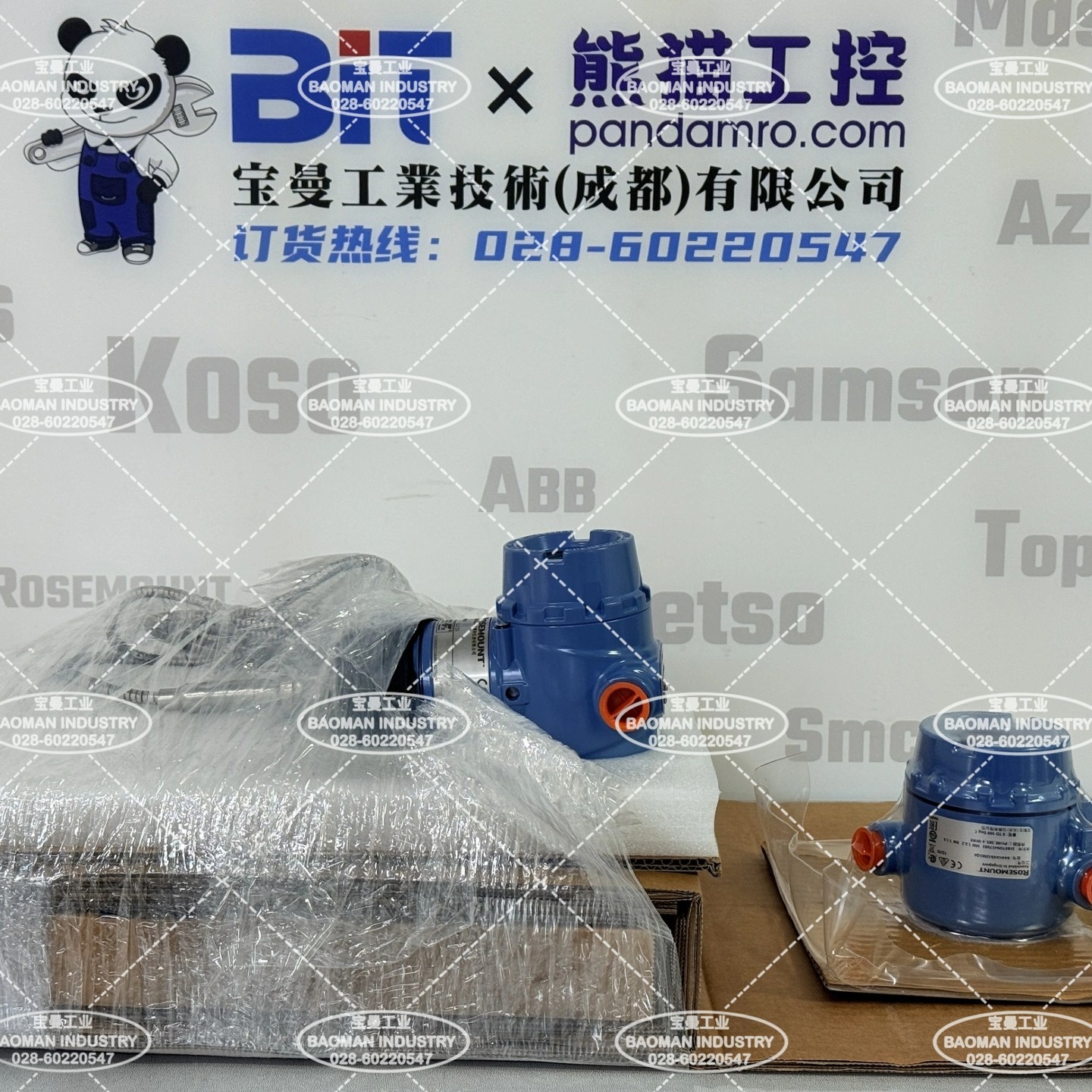
Transmitter appearance reference, not the actual product; parameters subject to the official data sheet
II. Principles and Standard Framework
| Aspect | RTD | TC |
|---|
| Sensing mechanism | Resistance-temperature effect; platinum alpha = 0.00385 ohm/ohm/degC (0 to 100 degC) | Seebeck effect; voltage depends on the difference between hot and cold junction temperatures |
| Output signal | Resistance; Pt100 is 100.00 ohm at 0 degC, about 0.385 ohm per degree | Millivolt signal; Type K about 41 microvolts per degree |
| Excitation | Requires external measuring current, typically 1 mA; self-heating error applies | No excitation needed, self-generating; instrument terminal temperature must be measured for cold-junction compensation |
| Cold-junction compensation | Not required | Mandatory; extension cable, compensating device or electronic compensation in the transmitter |
| Main error sources | Lead resistance, self-heating, mechanical stress, insulation degradation | Cold-junction error, wrong extension cable, alloy ageing drift |
| Linearity | Near-linear, follows the Callendar-Van Dusen polynomial | Nonlinear; requires reference tables or transmitter linearization |
| Long-term stability | Platinum drifts little with good reproducibility | Base-metal types (K/J/N/E/T) drift with service hours, a documented effect |
Signal amplitude differs markedly in the same temperature band: at 1 mA a Pt100 delivers about 385 microvolts per degree versus about 41 microvolts per degree for Type K, roughly nine times more signal per degree. However, a thermocouple needs no excitation, is simple, and responds faster, although much of that speed advantage disappears inside a heavy thermowell.
The data in this section was obtained via web search. Source: IEC 60751 and IEC 60584-1; https://instranova.com/?p=2697 and https://chastotnik.ua/en/a-pt100-vs-thermocouple. Formulas and tolerances are subject to the standard texts.
III. Common Types and Temperature Ranges
| Family | Type / Materials | Typical range | Features and applications |
|---|
| Platinum RTD | Pt100 / Pt1000 (IEC 60751) | -200 to +850 degC | Best accuracy and interchangeability; Pt1000 reduces the effect of lead resistance |
| Copper RTD | Cu50 / Cu100 | -50 to +150 degC | Linear and inexpensive at low temperature, narrow range, oxidizes when hot |
| Nickel RTD | Ni100 | -60 to +180 degC | High sensitivity but poorer linearity, limited use |
| Type K | NiCr-NiAl | -270 to +1372 degC | General purpose, low cost; watch oxidation and green rot at high temperature |
| Type J | Fe-CuNi | -210 to +760 degC | High sensitivity and low cost; iron leg corrodes, suited to reducing atmospheres |
| Type T | Cu-CuNi | -270 to +400 degC | Stable at low temperature, suited to cryogenic service |
| Type E | NiCr-CuNi | -270 to +870 degC | Highest thermoelectric output among common types, good for sensitive low-to-medium range measurement |
| Type N | NiCrSi-NiSi | -270 to +1300 degC | Better high-temperature stability and ageing resistance than Type K, slightly more expensive |
| Type S / R | PtRh-Pt (noble metal) | 0 to +1600 degC | High-temperature reference and precision work, costly with small signal |
| Type B | Pt30Rh-Pt6Rh | +600 to +1700 degC | High-temperature duty, very small output at low temperature; matching extension cable required |
The data in this section was obtained via web search. Source: IEC 60584-1 and IEC 60751; https://www.thermocoupleinfo.com/ and https://industrialmonitordirect.com/blogs/knowledgebase/selecting-pressure-and-temperature-sensors-for-oil-and-gas. Actual ranges and tolerances are subject to the standard texts and manufacturer data sheets.
IV. Accuracy Classes and Error Sources
| Standard | Class | Tolerance (greater of absolute value or percentage) | Range notes |
|---|
| IEC 60751 | AA | +/- (0.10 + 0.0017|t|) degC | Wire-wound about -50 to +250 degC; thin-film about 0 to +150 degC |
| IEC 60751 | A | +/- (0.15 + 0.002|t|) degC | Wire-wound about -100 to +450 degC; thin-film about -30 to +300 degC |
| IEC 60751 | B | +/- (0.30 + 0.005|t|) degC | Wire-wound about -196 to +600 degC; thin-film about -50 to +500 degC |
| IEC 60584-1 | K/N Class 1 | +/- 1.5 degC or +/- 0.004|t| | -40 to +1000 degC |
| IEC 60584-1 | K/N Class 2 | +/- 2.5 degC or +/- 0.0075|t| | -40 to +1200 degC |
| IEC 60584-1 | T Class 1 | +/- 0.5 degC or +/- 0.004|t| | -40 to +350 degC |
| IEC 60584-1 | J Class 1 | +/- 1.5 degC or +/- 0.004|t| | -40 to +750 degC |
| IEC 60584-1 | B Class 2 | +/- 0.0025|t| | +600 to +1700 degC, no Class 1 |
At 100 degC, for example, Pt100 Class A is about +/- 0.35 degC and Class B about +/- 0.80 degC, versus +/- 1.5 degC for Type K Class 1 and +/- 2.5 degC for Class 2. Solving 0.30 + 0.005t = 1.5 gives t = 240 degC: near that point Class B Pt100 and Type K Class 1 have comparable tolerance. Below it the RTD is tighter; above it the thermocouple wins on range and cost. Tolerances apply to new sensors and do not represent aged accuracy.
The data in this section was obtained via web search. Source: IEC 60751 and IEC 60584-1; https://chastotnik.ua/en/a-pt100-vs-thermocouple and https://instranova.com/?p=2697. Classes, formulas and ranges are subject to the standard texts.
V. Selection Criteria and Installation Points
| Criterion | Favor RTD | Favor TC |
|---|
| Temperature range | Low-to-medium band about -200 to +600 degC | Above 600 degC, especially furnaces, fired heaters and gas turbines |
| Accuracy need | Metering, custody transfer and precision control | General process monitoring where a few degrees is acceptable |
| Long-term stability | Platinum drifts little with good interchangeability | Base-metal types drift with service life and need periodic recalibration |
| Response speed | Larger thermal mass, slower inside a thermowell | Probe can be very fine; bare-wire response is fast |
| Cost and distance | Higher sensor cost; 3/4-wire needed for long runs | Cheap sensor but dedicated extension cable required |
| Installation environment | Low vibration, accessible for maintenance | More robust in strong vibration, shock and tight spaces |
| Installation point | RTD practice | TC practice |
|---|
| Wiring scheme | 3-wire cancels lead resistance; 4-wire for high accuracy; 2-wire only for short runs | Two poles plus extension cable; ordinary copper cable must not replace extension cable |
| Compensation | Set transmitter input type (Pt100/Pt1000); correct lead resistance if needed | Cold-junction compensation is mandatory; type and extension cable must match |
| Polarity | Resistive element has no polarity; 3/4-wire terminals must follow the marking | Polarized; reversed connections create a clear offset |
| Thermowell | Watch insertion depth and self-heating; avoid excessive measuring current | Watch heat shunting; thermowell design may refer to ASME PTC 19.3 TW |
| Fault signature | Open circuit gives high resistance / over-range; short gives low resistance / under-range | Open circuit gives high resistance or abnormal voltage; short drives reading toward cold-junction temperature |
Installation and wiring guidance reflects recognized engineering practice. Source: IEC 60751, IEC 60584-1 and ASME PTC 19.3 TW standard numbers, cross-checked at https://industrialmonitordirect.com/blogs/knowledgebase/selecting-pressure-and-temperature-sensors-for-oil-and-gas. Terminals and extension cables are subject to the official manual and nameplate.
VI. Selection Guide and Common Configurations
Selection guide: First fix the process temperature ceiling and accuracy requirement. Below roughly 600 degC with high accuracy and stability needs, choose Pt100 (3-wire or 4-wire). Above 600 degC, or where fast response, low cost and vibration resistance matter, choose a thermocouple and select the K/J/T/E/N/S/R/B type by atmosphere and temperature. Then confirm transmitter input type, wiring scheme, thermowell material and insertion depth; in hazardous areas also verify the Ex marking and certification. Ex ia intrinsic safety is NOT Ex d flameproof and must never be mixed; if an approval cannot be found, state "unable to confirm, please verify with the manufacturer". Type, tolerance class and extension cable are subject to the official data sheet, standard text and nameplate.
Common configurations: Pt100 3-wire plus temperature transmitter (4-20 mA/HART) for precision low-to-medium temperature measurement; Pt100 4-wire for metering and laboratory use; mineral-insulated Type K or N plus temperature transmitter for furnaces and high-temperature piping; Type T for cryogenic service; Type S/R/B for high-temperature reference. Specific models and ordering codes are subject to the manufacturer's selection tool and nameplate.
If you are selecting a temperature sensor for a measurement point, please send us the medium, temperature band, accuracy requirement, installation method and existing input card. We can review the type, wiring scheme and range against the IEC standards and official data sheets.
Orders & Inquiries
Baoman Industrial Technology (Chengdu) Co., Ltd
Tel: +86 028-60220547 | Email: info@bit-cd.com
Address: Room 1108, Building A, Tingbiao Central Plaza, No. 158 Erxianqiao East Road, Chenghua District, Chengdu, Sichuan Province, China
The information above is not guaranteed to remain valid at all times. Subsequent changes will not be notified separately. Please confirm the latest information at the time of inquiry.
 简体中文
 ENGLISH


