简体中文
 ENGLISH
| Common Pneumatic Actuator Accessories (Lock-up Valve / Solenoid / Limit Switch) | ||||||||||||||||||||||||||||||||||||||||||||||||||||||||||||||||||||||||||||||||||||||||
| Release time:2026-11-21 13:41:01 | Views: | ||||||||||||||||||||||||||||||||||||||||||||||||||||||||||||||||||||||||||||||||||||||||
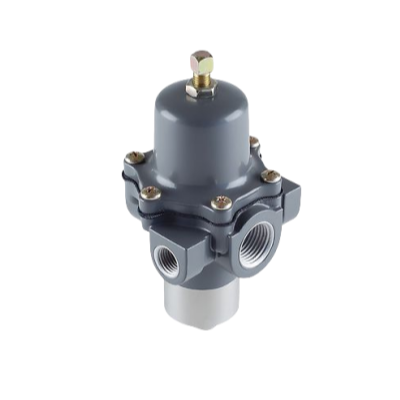
Besides the positioner, a pneumatic actuator often needs a lock-up valve, a solenoid valve and a limit switch: the lock-up valve holds the valve position on air failure, the solenoid valve performs remote switching and interlocks, and the limit switch feeds valve position back to the PLC/DCS. These three have different roles and cannot replace one another. Based on public data for the Fisher 167D lock-up valve, ASCO solenoid valves and TOPWORX limit switches, this article covers their functions, selection points and matching relationships. I. Product Positioning
A common misconception must be cleared up first: a lock-up valve is not a positioner. A positioner holds the valve at the set opening through continuous air pressure output, while a lock-up valve cuts off or locks the pressure inside the actuator when the air supply fails, keeping the valve at its pre-failure position. The 167D is a lock-up valve and does not perform continuous modulation. Source: Fisher 167D lock-up valve official data (CN195), ASCO 8327 official catalog (80020GB-2018/R01, CN1403), TopWorx discrete valve controller product manual (TOPWORX.pdf, CN1501). Parameters are subject to the latest original data.
II. Functions and Division of the Three Accessories
The three sit at different points in the control loop: the positioner "modulates", the lock-up valve "holds position on air failure", the solenoid valve "switches the air path / interlocks", and the limit switch "reports position". Select each by its own function; none can substitute for another. Source: Summary based on official data for Fisher 167D (CN195), ASCO 8327 (CN1403) and TopWorx limit switches (CN1501), organized by product function. III. Lock-up Valve Selection Points (Fisher 167D)
Select first between a 2-way (167D) and 3-way (167DA) valve, then choose the set-pressure range by actuator supply pressure (e.g. 14-20, 16-35, 25-60, 40-125 psig), then check port size (1/4 or 1/2 NPT), body pressure rating and temperature. The lock-up valve is used in "position hold" circuits, locking actuator pressure on air failure; the complete configuration is subject to the original manual and the nameplate / order. Source: Fisher 167D lock-up valve official data (CN195). Specific set values and order numbers are subject to the original manual and nameplate / order. IV. Solenoid Valve Selection Points (ASCO)
Select the solenoid valve by first defining positions and function (3/2 or 5/2, normally open / closed), then direct-acting or pilot-operated (direct-acting such as the 8327 for zero differential pressure; pilot-operated such as the 531 for higher differentials), then check body material, connection, voltage, flow Cv/Kv and explosion protection form. Key red lines: Ex ia intrinsic safety (e.g. the WSNFTIS prefix of the 8327) is NOT Ex d flameproof enclosure (WSNF / NF prefixes); choose a safety barrier or flameproof enclosure by loop type and never mix them; where data is unavailable, write "please consult for confirmation". Source: ASCO original Series 327 catalog (document 80020GB-2018/R01, CN1403), ASCO 531 / 325 official selection data (CN1465 / CN1404). Explosion protection forms are strictly distinguished; parameters are subject to the original data sheet / nameplate. V. Limit Switch Selection Points (TOPWORX)
The TOPWORX explosion protection form is determined by digit 3 area classification: 0 = intrinsically safe Ex ia IIC T4/T6; 1 / C = flameproof Ex d (DXP is Ex d IIB+H2, C is Ex d IIC, no-solenoid versions only); 2 = non-incendive Ex nA; G = general purpose; W = no approval; independent of the housing letter T / D or the suffix P / S. Sensors must match area classification: M2/M4 mechanical switches cannot be class 2, L2 is for no-solenoid versions only, and AS / DN / ES buses cannot be class 0. Ex ia intrinsic safety is NOT Ex d flameproof enclosure; where data is unavailable, write "please consult for confirmation". Source: TopWorx original "Discrete Valve Controller" product manual (TOPWORX.pdf, CN1501) selection rules. Explosion protection is determined by digit 3; sensor compatibility is checked per the original manual. VI. Pneumatic Accessory Matching RelationshipsA typical pneumatic control valve accessory chain is: air supply to filter regulator to positioner to (lock-up valve / solenoid valve) to actuator, with the limit switch feeding back to the PLC/DCS. The table below lists the responsibility and common combination at each stage.
When matching, note that the set pressure and voltage of the lock-up valve and solenoid valve must suit the actuator air supply and control loop; the limit switch bus protocol (FF / DeviceNet / AS-i / Profibus DP / HART, etc.) must match the control system; and the approval forms of all explosion-protected parts (Ex ia / Ex d / Ex nA) must be checked uniformly against area classification, never inferred from experience. Source: Fisher 67C/67D technical manuals (5469 / 5858), Fisher 167D (CN195), ASCO (CN1403 / CN1404 / CN1465) and TopWorx (CN1501) official data, organized per a typical pneumatic control loop. VII. Selection Guide and Common ModelsSelection guide: 1. distinguish the three accessories by function — the lock-up valve holds position on air failure, the solenoid valve switches the air path and interlocks, and the limit switch reports position, with no substitution; 2. select the lock-up valve by 2-way / 3-way, set pressure range, port size and body rating (e.g. Fisher 167D / 167DA); 3. select the solenoid valve by positions, direct / pilot operation, voltage, Cv/Kv, body material and explosion protection (e.g. ASCO 8327 / 531 / 325); 4. select the limit switch by mounting (DXP bracket / TXP·TXS direct mount), sensor type, area classification (digit 3) and bus protocol; 5. Ex ia intrinsic safety is NOT Ex d flameproof enclosure, and where approval data is unavailable write "please consult for confirmation", with parameters subject to the original manual and nameplate / order. Common models: lock-up valves Fisher 167D / 167DA (e.g. 167DA-15, 167DA-16, 167DA-13, 167DA-85); solenoid valves ASCO WSNFTIS8327B312 24DC, SCG531C001MS 24DC, SCXG325B006; limit switches TOPWORX DXP-0H0GN4B, TXP-M20FLPM, TXS-L2CFLPM, etc. If you are selecting accessories for a pneumatic actuator, want to decide between a lock-up valve and a solenoid valve or between intrinsic safety and flameproof enclosure for a limit switch, or want to verify matching ports and bus protocols, please feel free to contact us. We can check the configuration together against your air supply, control loop and area certification. Orders & InquiriesBaoman Industrial Technology (Chengdu) Co., LtdTel: +86 028-60220547 | Email: info@bit-cd.com Address: Room 1108, Building A, Tingbiao Central Plaza, No. 158 Erxianqiao East Road, Chenghua District, Chengdu, Sichuan Province, China The information above is not guaranteed to remain valid at all times. Subsequent changes will not be notified separately. Please confirm the latest information at the time of inquiry. |