简体中文
 ENGLISH
| Fisher 6353 Pilot - Working Principle & Matching Regulators | ||||||||||||||||||||||||||||||||||||||||||||||||||||||||||||||||||||||||||||||||||||||||
| Release time:2026-11-21 02:05:02 | Views: | ||||||||||||||||||||||||||||||||||||||||||||||||||||||||||||||||||||||||||||||||||||||||
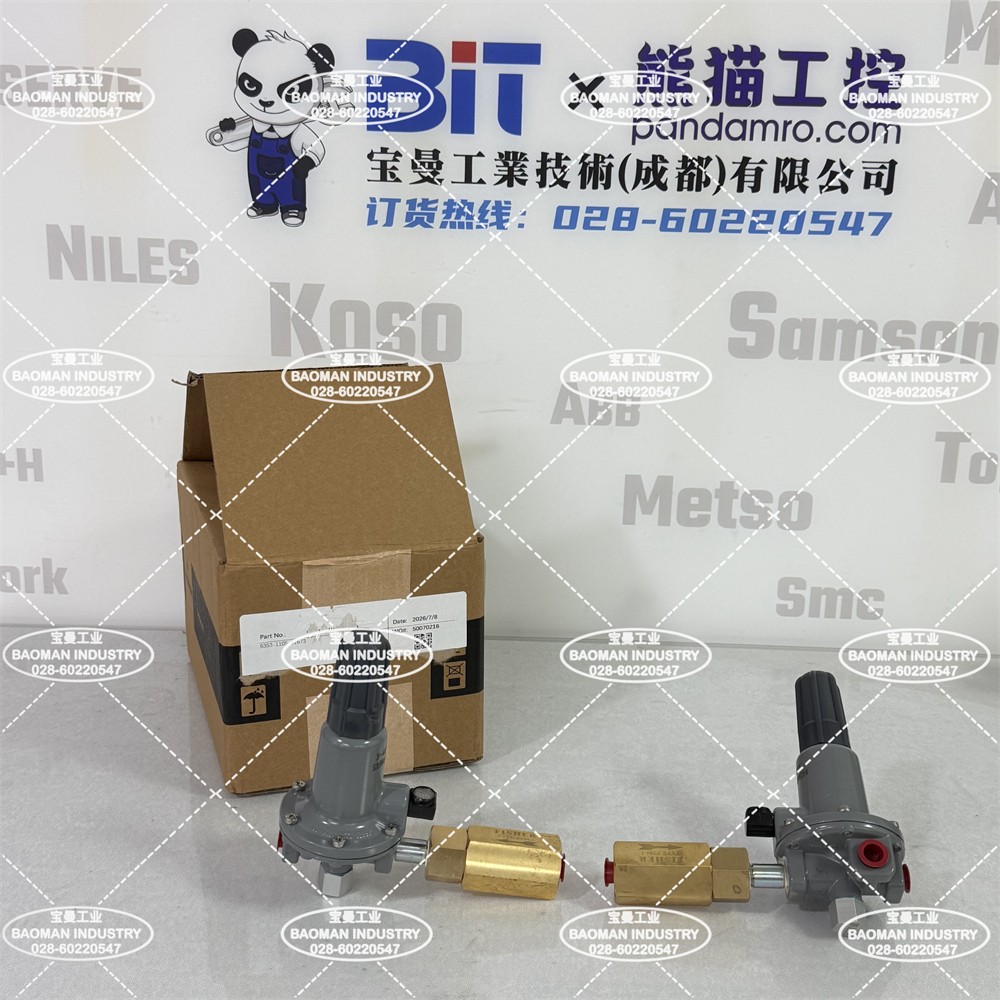
The Fisher 6353 is not a standalone product model; it is one specific type within the Fisher 6350 / 6360 Series Pilots. A pilot is the core element that gives a pressure reducing, relief or backpressure regulator its accuracy: it senses downstream pressure, converts inlet pressure into a controlled loading pressure through gain and restriction elements, and applies that loading pressure to the main valve actuator diaphragm to drive throttling. This article explains the construction and principle of the 6353, its key data, the distinctions between pilot types in the same series and typical matching regulators. I. Product Positioning
The Type 6353 pilot uses a 1/4 NPT female connection, has a maximum inlet pressure of 600 psig (41.4 bar) and an outlet (control) pressure range of 3 to 200 psig (0.21 to 13.8 bar). It should be selected as a pressure rating and connection option within the 6350 series, compared against Types 6351, 6352, 6354L / M / H, 6358 and 6365, rather than treated as a complete standalone instrument. Data obtained via online search. Sources: Emerson official Fisher 6350 and 6360 Series Pilot product page; Fisher official manual 6350 Series Pilots for Pilot-Operated Pressure Reducing Regulators Instruction Manual (2026-03-18).
II. Construction and Working PrincipleThe control chain of a pilot-operated regulator has four steps: sensing, comparison, amplification and actuation.
Because the pilot amplifies a small downstream pressure change into a loading pressure change on the main valve diaphragm, pilot-operated regulators maintain high accuracy at large body sizes and pressure differentials. The adjustable gain of the 6353 lets the same pilot suit different main valves and duties. Gain setting and restriction specification must be determined from the official manual and site commissioning; specific orifice numbers are not assumed here. Source: Fisher official manual 6350 Series Pilots for Pilot-Operated Pressure Reducing Regulators Instruction Manual; Fisher regulator pilot pairing data. Exact adjusting mechanisms are subject to manual drawings. III. Technical Data of the 6353
Data obtained via online search. Sources: Emerson official Fisher 6350 and 6360 Series Pilot product page; Fisher official manual 6350 Series Pilots for Pilot-Operated Pressure Reducing Regulators Instruction Manual (2026-03-18). Parameters are subject to the official manual. IV. Pilot Types in the 6350 Series
Key distinctions: 1. Types 6351, 6352, 6353 and 6354L share the 3 to 200 psig outlet range and 600 psig inlet rating, but the 6351 is restricted to gas service. 2. Types 6354M and 6354H cover the higher 175 to 300 psig outlet range. 3. Types 6358 and 6365 belong to different pressure ratings and manual families, so their spares and data must not be mixed with the 6353. 4. The exact restriction, spring and plug configuration is subject to the nameplate and official order table. Data obtained via online search. Sources: Emerson official Fisher 6350 and 6360 Series Pilot product page; Fisher official manuals 6350 and 6360 Series Pilot Construction Bulletin and Type 6365 and 6358 Series Pilots Instruction Manual. V. Matching Regulators and Typical Applications
Data obtained via online search. Sources: Emerson official Fisher regulator and 6350 / 6360 Series Pilot product pages; Fisher official manuals D100339X012 (1098-EGR), D100315X012 (63EG) and the 6350 series pilot manual. Pairings are subject to the official manual. VI. Selection Guide and Common ModelsSelection guide: First note the role of the 6353: it is a pilot type within the 6350 series, and the selection object is a "pilot plus main valve" combination rather than a single instrument. Step one, screen the type by application (reducing / relief / backpressure) and medium (gas / liquid), excluding the 6351 for liquid service. Step two, compare inlet pressure and outlet control range: the 6353 covers 600 psig inlet and 3 to 200 psig outlet; for a higher outlet range look at the 6354M / H, and for other pressure ratings at the 6358 / 6365. Step three, select standard or high-temperature elastomers by temperature, observing the 0 to 180 degrees F limit for water service. Step four, confirm the 1/4 NPT interface, restriction, spring and gain setting against the main valve model (such as the 1098-EGR) and verify with Emerson against the nameplate. The 6353, 6358 and 6365 belong to different manual families, so spares and data must not be interchanged. Common models: Fisher 6353 pilot (6350 series, 1/4 NPT, 600 psig inlet, 3 to 200 psig outlet, gas and liquid); other types in the same series include 6351, 6352, 6354L, 6354M / H, plus the 6358 and 6365 pilots for other pressure ratings; typical matching main valves include the 1098- / 1098H-EGR, Type 63EG and Type 627F. If you are selecting a pilot for a regulator, or want to compare the 6353 with the 6358 / 6365 by pressure rating and matching main valve, please feel free to contact us. We can check the pilot type and ordering information together against your medium, inlet and outlet pressures, main valve model and site certification. Orders & InquiriesBaoman Industrial Technology (Chengdu) Co., LtdTel: +86 028-60220547 | Email: info@bit-cd.com Address: Room 1108, Building A, Tingbiao Central Plaza, No. 158 Erxianqiao East Road, Chenghua District, Chengdu, Sichuan Province, China The information above is not guaranteed to remain valid at all times. Subsequent changes will not be notified separately. Please confirm the latest information at the time of inquiry. |